-
Start page

-
Insights
-
Articles
- SXC Retrospective: Humans + AI Shape the Future of UX
SXC Retrospective: Humans + AI Shape the Future of UX
A summary from the STHLM Xperience Conference 2025 (SXC2025) about the future of design, technology and human-centered digital experiences.
SXC 2025 brought together international designers, researchers, technologists and product leaders to explore one of the most significant shifts of our time: how artificial intelligence is not only changing the tools we use, but also reshaping our roles, relationships, ways of working and expectations of digital experiences. Throughout the day, three themes surfaced repeatedly: AI as a catalyst, humans as the compass, and culture as the key to success.
AI Is Transforming Design at Its Core – But Humans Remain the Directors
André Fangueiro, Head of Design at TietoEvry, opened the conference by illustrating an industry in rapid transformation. He highlighted how AI is integrated across the entire design process, from research to prototyping, and described two parallel workflows:
AI‑augmented workflows, where AI boosts efficiency and supports designers in their tasks.
AI‑driven workflows, where AI itself produces concepts and solutions that humans evaluate, refine and guide.
In the center is not technology, but our ability to stay open, critical and experimental. Just as digitalization once reshaped the design profession, AI is now becoming the next fundamental tool in the designer’s toolbox.
When Knowledge Isn’t Enough – Design as Activation, Not Information
Tessa Griffioen shared insights from Groningen in the Netherlands, where residents have lived with recurring earthquakes and cracking houses for decades. Despite being well informed about potential financial compensation, many never started their claims process.
The reason? Not a lack of knowledge – but a lack of ability to act.
Her research highlighted stress, low self‑confidence and behavioral archetypes that demand different design strategies. Her message was clear: design must help people take action, not just understand. As digital interfaces grow increasingly complex, this insight becomes more crucial than ever.
Typography as a Silent Killer
With humor and precision, typographic consultant Oliver Schöndorfer demonstrated how “bad text” can quietly undermine conversion, accessibility and user experience. Companies such as IKEA and Apple served as examples of how small missteps in contrast, hierarchy and typeface choices can create major issues in global systems.
A standout insight: Good typography is UX design’s secret superpower.
Customer Insights in Weeks, Not Months
Ville Österlund and Merituuli Kosonen showed how Nordea Life Finland revolutionized product development using a permanent customer community. With LeanLabs methodology, they now gather user insights in 24–48 hours instead of eight weeks. The results: faster product development, higher customer engagement and more effective innovation.
A central takeaway: Guessing is the most expensive research method.
Design as a Business Tool – Not a Theory
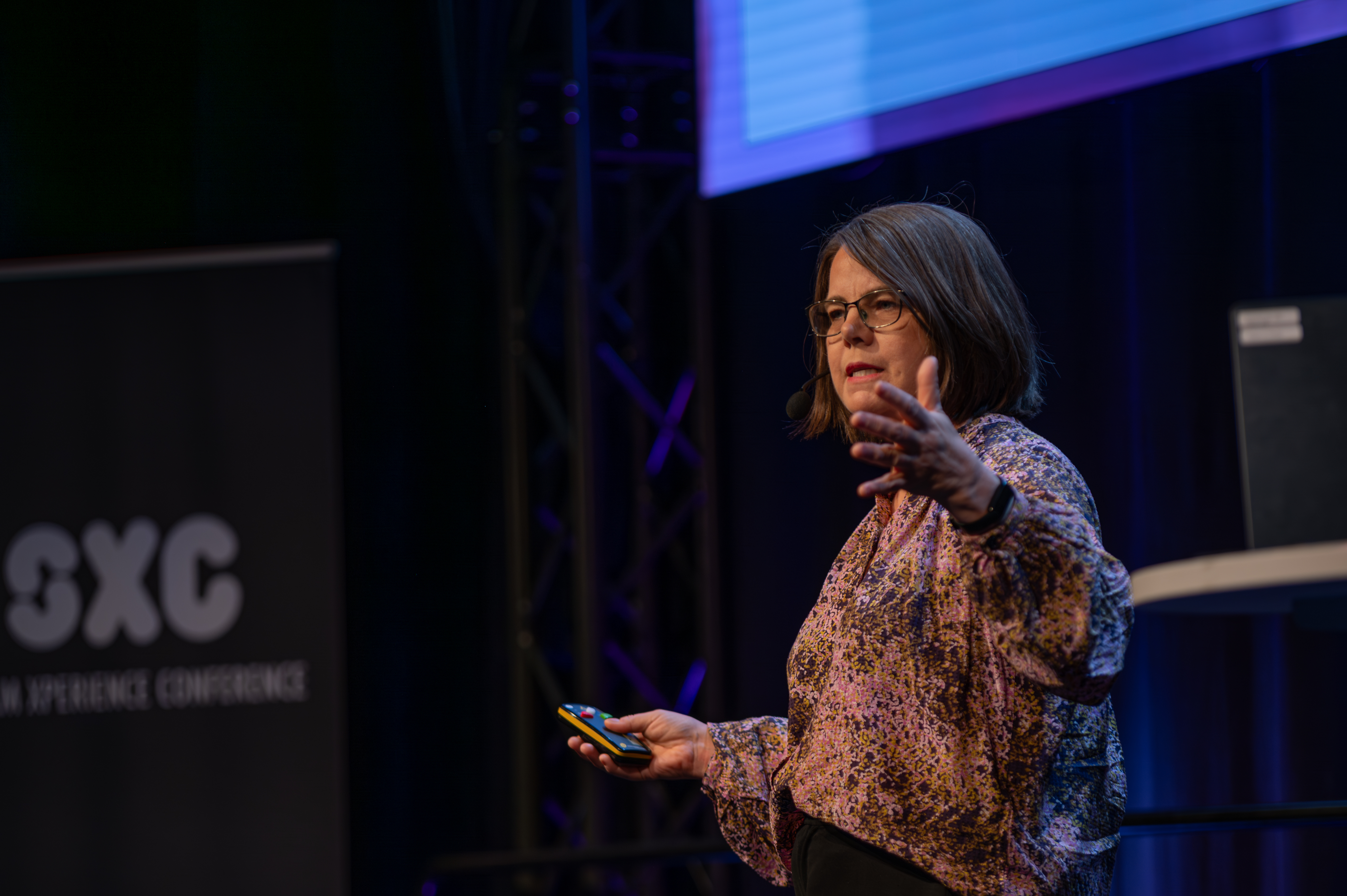
Mall Allpere delivered one of the most appreciated talks of the day. Her message: design creates value only when it ties into what leadership truly cares about—churn, retention, costs and revenue.
She captured her philosophy simply: “Design frameworks don’t convince. Business results do.”
UX gains real power when it proves measurable impact on core business KPIs.
Relationships – The Real Source of AI’s Value
Josefin Schönebeck from Platform24 highlighted how relationships between humans and AI, within teams, and with users determine how well AI works in practice. In healthcare, trust is essential, so her team prioritizes transparency, continuous feedback and tight cross‑functional collaboration.
Her message: Technology accelerates. Relationships determine the speed.
Break Rituals, Follow Principles
Roberto Chaves, UX Designer at Tabi, encouraged participants to let go of rigid processes and outdated design rituals. Jargon, ceremonies and unnecessary complexity risk killing creativity. Teams should instead follow principles, communicate clearly and stay curious.
As he put it: “Think as the wise man thinks, but speak as the simple people do.”
Content Systems – The Future of Scalable Copy
Oleksii Tkachenko, Senior Content Designer at Perk, explained why AI generates more text than ever, and why content designers must build structures and rules to avoid chaos.
His core point: AI amplifies everything, even inconsistency.
Content systems provide clear patterns for both humans and AI to work within.
When AI Makes Production Fast and Cheap, What Defines Quality?
Daniel Stridsberg, Co‑founder & Design Director at ROST Studio, described a future where AI generates nearly everything we once needed entire specialist teams for video, 3D, code, branding. As production becomes fast and inexpensive, traditional quality models begin to break down.
The new question isn’t “Can we?” – because AI almost always can –
but “Should we?”
Future competition will hinge on subjective quality: culture, emotion and meaning.
Zalando and the Future of Shopping
Jarno Koponen provided insights into how Zalando has built an AI assistant reshaping the shopping experience for millions.
A paradigm shift is underway—from filters and lists to natural language, inspiration and multimodal input.
A striking takeaway:
The future of shopping is a personal agent, not a search box.
When AI Becomes a Team Member
In an experiment, Linda Wohlfeil & Kristina Sabotic from VASS shared how UX, QA and architecture collaborated with AI to build a full conference app—with both successes and chaos.
Their conclusion: AI works fast, but lacks context, empathy and creativity. Humans provide direction and meaning.
Branding i en AI‑tid - Become More Human, Not Less
Freddie Öst from SNASK closed the conference with a vibrant manifesto for humanity in a digital age. Humor, emotion and boldness build identity and relationships—and relationships are what build brands.
“You die without relationships. Brands die without emotions.”
It was a fitting conclusion: technology is powerful, but humanity is irreplaceable.
Conclusion: AI Isn’t the Future – Humans Are the Future With AI
The conference made one thing clear: AI does not create the future. We do – with AI as our amplifier. AI will continue transforming production, research, development, design and analysis. But the greatest value will come from those who can combine:
technology + culture + empathy + creativity + critical thinking
In a world where everything can be automated, what becomes most valuable is what is human.
Read more in our Future Outlook 2026: What’s Next in UX, UI and Service Design?